A kidney stone can turn from an inconvenience into an urgent problem quickly. Pain that comes in waves, nausea, blood in the urine, or trouble passing urine can make it hard to work, sleep, or feel comfortable at home. When a stone is unlikely to pass on its own, patients often ask about kidney stone laser versus shockwave treatment. Both approaches can be highly effective, but they work differently and fit different stone situations.
The best choice is not always the least invasive option or the procedure with the shortest name. Stone size, location, density, your anatomy, medical history, symptoms, and personal preferences all help guide a personalized treatment plan.
Kidney Stone Laser Versus Shockwave: The Core Difference
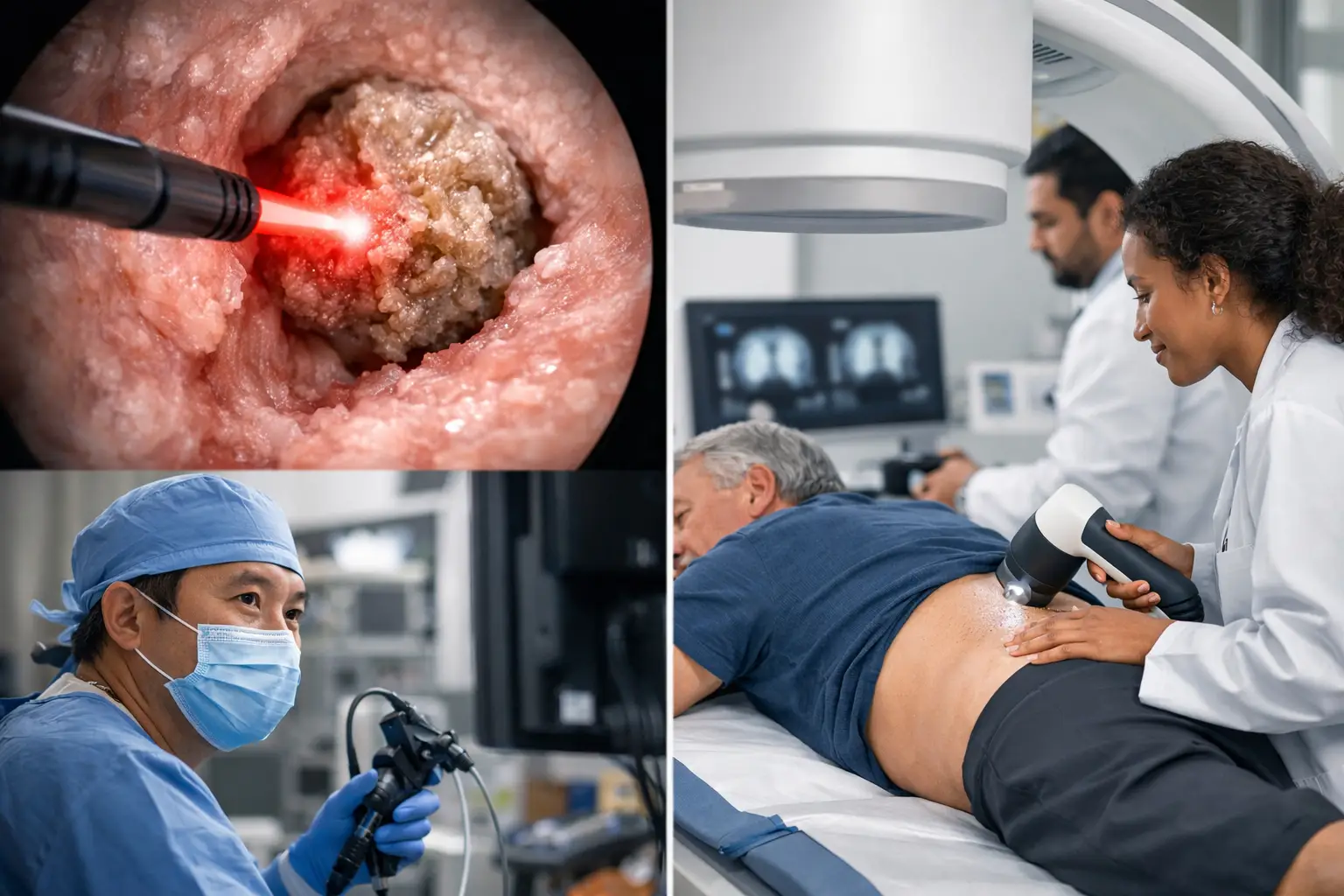
Shockwave lithotripsy, often called ESWL, breaks a kidney stone from outside the body. A machine sends focused sound waves through the skin to fragment the stone into smaller pieces that can pass through the urinary tract.
Laser lithotripsy is performed during ureteroscopy. A urologist passes a very thin scope through the urethra and bladder and into the ureter or kidney. Once the stone is visible, a laser breaks it into dust-like particles or small fragments that can be removed or passed naturally.
Both treatments avoid a large surgical incision. However, shockwave treatment relies on external energy reaching the stone accurately, while laser treatment allows the urologist to see and treat the stone directly.
When Shockwave Treatment May Be a Good Option
Shockwave lithotripsy can be appealing because nothing needs to be passed through the urinary tract to reach the stone. It is commonly considered for certain kidney stones and upper ureter stones, particularly when they are relatively small, clearly visible on imaging, and located where shock waves can be focused effectively.
For the right patient, shockwave treatment may involve less internal instrumentation and a relatively quick return to light activities. Patients may still experience soreness, bruising, blood in the urine, and cramping as fragments pass. Passing those fragments can be uncomfortable, and some patients need pain medication for a short time.
The main trade-off is that shockwave treatment does not remove the stone immediately. It breaks the stone apart, then your body must clear the pieces. Some stones require more than one treatment session, and residual fragments may remain. Larger or harder stones are less likely to break apart completely with shock waves alone.
Shockwave treatment may not be the ideal choice when a stone is very dense, large, difficult to target, or positioned in a location where fragments are unlikely to drain well. Body habitus can also affect whether the shock waves can reach a stone with enough precision and energy.
When Laser Lithotripsy May Be Preferred
Laser lithotripsy through ureteroscopy gives the urologist direct access to the stone. This can be especially helpful for stones in the ureter, stones causing significant blockage, stones that have not responded to other management, or stones that are harder or larger than ideal for shockwave treatment.
Because the stone is seen directly, the urologist can break it apart precisely and may retrieve pieces with a small basket. That often provides a higher likelihood of being stone-free after one procedure, although no procedure can promise a particular result for every patient.
Laser treatment is usually performed under anesthesia. Afterward, many patients have temporary burning with urination, urinary urgency, mild blood in the urine, or discomfort in the bladder or flank. A temporary ureteral stent may be placed to support drainage and healing. While a stent can be valuable, it can also cause pressure, frequency, or discomfort until it is removed.
For some patients, the ability to address the stone directly is worth the short-term recovery from ureteroscopy and a possible stent. For others, a less invasive shockwave approach may be reasonable if the stone characteristics are favorable.
What “More Effective” Really Means
Effectiveness can mean different things. One patient may prioritize avoiding a stent. Another may want the highest likelihood of clearing a painful stone in one procedure. Someone with a busy work schedule may focus on recovery time, while a patient with repeated stone episodes may want a plan that reduces the chance of needing another procedure soon.
In general, laser ureteroscopy tends to provide more predictable stone clearance for many ureteral stones and more complex stones. Shockwave lithotripsy can be an excellent option for well-selected stones, but it has a greater chance that fragments will remain or that a second procedure will be needed.
How Your Urologist Chooses Between Laser and Shockwave
A treatment recommendation starts with accurate imaging, often a CT scan or other appropriate study. Imaging helps identify the stone’s size, exact location, number of stones, and signs of obstruction. It may also help estimate stone density, which matters because very dense stones can resist shockwave fragmentation.
Your care team will also consider whether you have active infection, reduced kidney function, only one functioning kidney, uncontrolled pain, persistent vomiting, or significant urinary blockage. These factors may change the urgency of treatment. A stone with infection and obstruction can become a medical emergency and may need prompt drainage before definitive stone removal.
Medical history matters as well. Blood-thinning medications, bleeding risks, pregnancy, prior urinary tract surgery, and certain anatomy can affect which procedure is safest. The decision should be individualized rather than based on a single rule about stone size.
At Urology Experts, the goal is to pair advanced treatment options with a clear explanation of why one approach may better fit your stone and your life. You should understand what the procedure involves, what recovery may feel like, and what follow-up is needed before moving forward.
Recovery: What to Expect After Each Procedure
Recovery varies, but most patients can expect some temporary urinary symptoms after either procedure. With shockwave treatment, the key recovery period often comes as stone fragments pass over the following days or weeks. Your urologist may recommend drinking fluids as directed, using a urine strainer to collect fragments for analysis, and taking medications to manage pain or help the ureter relax.
After laser ureteroscopy, discomfort is often related to the scope procedure or a temporary stent rather than to passing large stone fragments. Patients can usually return to normal routines relatively soon, but strenuous activity may need to wait briefly. Stent removal timing depends on the procedure and your individual healing needs.
Call your urology team promptly if you develop fever, chills, severe or worsening pain, inability to urinate, persistent vomiting, or heavy bleeding. These symptoms can signal infection, obstruction, or another issue that needs timely care.
The Procedure Is Only Part of Stone Care
Removing a stone addresses the immediate problem, but prevention is what protects your future comfort and kidney health. If a fragment or passed stone is available, analysis can identify its composition. Calcium oxalate, uric acid, struvite, and cystine stones have different contributing factors and may call for different prevention strategies.
Depending on your history, your urologist may recommend urine testing, blood work, changes in fluid intake, dietary adjustments, or medication. Prevention is rarely about one food alone. It is about understanding why your body is forming stones and building realistic habits that fit your health needs.
The right treatment should leave you with more than relief from the current episode. It should give you a clear path forward, with a care plan designed around the stone you have now and the steps that may help prevent the next one.