If you are waking up several times a night to urinate, scouting bathrooms every time you leave home, or dealing with a weak stream that never feels finished, you are probably less interested in medical jargon than in one practical question: what are the best minimally invasive BPH procedures, and which one makes the most sense for you?
That is the right question to ask. Benign prostatic hyperplasia, or BPH, is common as men get older, but treatment is no longer limited to either daily medication or a major operation. Today, many men can get meaningful symptom relief with procedures designed to reduce downtime, preserve quality of life, and avoid the burden of more invasive surgery. The best option depends on your prostate size, anatomy, symptoms, and priorities.
What makes the best minimally invasive BPH procedures worth considering?
BPH treatment is not one-size-fits-all. Some men mainly want stronger urine flow and better bladder emptying. Others are focused on preserving ejaculation, minimizing time away from work, or avoiding a hospital stay. A procedure can look excellent on paper and still be the wrong fit if it does not match what matters most to the patient.
In general, the best minimally invasive BPH procedures aim to open the blocked urinary channel without the recovery associated with traditional surgery. Many can be performed in an outpatient setting. Compared with long-term medication, these procedures may offer better symptom relief and reduce the need to remember pills every day. Compared with more invasive surgery, they often shorten recovery and lower the risk of certain complications.
That said, minimally invasive does not always mean minor. Some options work best for smaller prostates, some are better for larger glands, and some may be less ideal if there is a prominent median lobe, urinary retention, bladder damage, or other complicating factors. A careful evaluation matters.
Best minimally invasive BPH procedures to know
Several modern treatments are commonly discussed when men want an effective option with less disruption to daily life. Each has strengths, trade-offs, and a different recovery profile.
UroLift
UroLift uses small implants to pull apart enlarged prostate tissue and widen the urethra. No tissue is removed, which is one reason many men are drawn to it.
Its main appeal is speed and simplicity. Recovery is often relatively quick, and the procedure is well known for preserving sexual function, especially ejaculation, in many patients. For men with mild to moderate enlargement who want to avoid cutting, heating, or removing tissue, UroLift can be a strong option.
The trade-off is that it is not ideal for everyone. Prostate size and shape matter, and some men with certain anatomy, including a significant median lobe, may need a different treatment. Symptom improvement can be meaningful, but for larger prostates or more severe obstruction, another procedure may offer stronger long-term relief.
Rezum water vapor therapy
Rezum treats BPH by using targeted steam to shrink obstructing prostate tissue. Over time, the body reabsorbs that treated tissue, opening the urinary passage.
This option appeals to men who want a minimally invasive procedure without permanent implants. It can be used in a range of prostate anatomies and has become a popular office-based or outpatient treatment. Many patients appreciate that it can improve symptoms while keeping recovery relatively manageable.
The main downside is patience. Relief is not immediate because the tissue shrinks gradually. Men may need a catheter for a short period after treatment, and urinary urgency, frequency, or burning can temporarily worsen before getting better. For some patients, that is an acceptable trade for avoiding a more invasive operation.
Aquablation Therapy
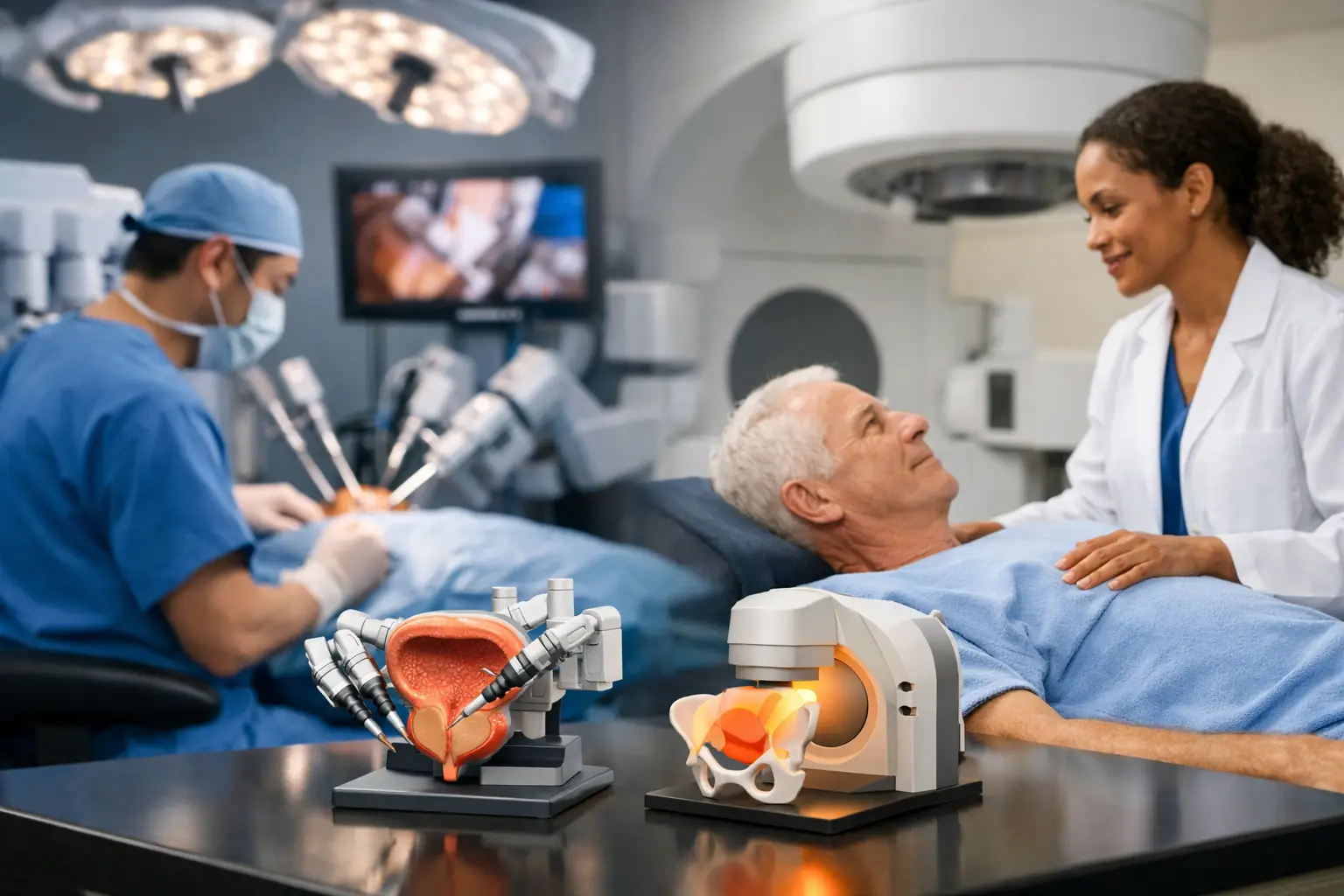
Aquablation Therapy combines imaging and robotic precision to remove prostate tissue with a high-pressure waterjet. It is more procedural than options like UroLift or Rezum, but it is still considered a less invasive alternative to older surgical approaches in many patients.
One reason Aquablation stands out is its versatility, especially for men with larger prostates or more complex anatomy. It can deliver substantial symptom relief and flow improvement while using real-time guidance to treat tissue accurately. For men who need more than a modest tune-up, this can be a very attractive middle ground between office procedures and traditional surgery.
The trade-off is that recovery may be a bit more involved than the lightest-touch options. Some patients may need short-term catheterization, and not every man needs a treatment this advanced. Still, for men with significant blockage who want strong results without a large incision, it is often one of the most compelling choices.
iTind
iTind is a temporary device placed in the prostate area to remodel tissue and improve urinary flow. It stays in place for a short period and is then removed.
What makes iTind appealing is that it does not permanently implant material or remove tissue. Some men like the idea of a reversible, lower-intervention approach. Recovery can be relatively quick, and sexual side effects are generally limited.
However, this is not the best fit for every anatomy, and long-term comparative data is not as extensive as it is for some more established procedures. It may be a reasonable option in select cases, but not usually the first choice when severe symptoms or larger prostates are involved.
How doctors decide which procedure is best
The phrase best minimally invasive BPH procedures can be misleading if it sounds like there is one winner for every patient. In reality, the best procedure is the one that fits the prostate and the person.
Prostate size is one of the biggest factors. A smaller or moderately enlarged prostate may respond well to UroLift or Rezum, while a larger gland may push the conversation toward Aquablation Therapy or another more definitive treatment. Prostate anatomy also matters. A median lobe, significant obstruction, or bladder changes from long-standing BPH can make some options more suitable than others.
Your goals matter just as much. If preserving ejaculation is at the top of your list, that changes the discussion. If your symptoms are severe and you want the strongest possible improvement in flow, that may point in a different direction. Men who travel, work full schedules, or care for a spouse often prioritize the shortest recovery. Others care more about durability and are willing to accept a slightly longer recovery for a more substantial result.
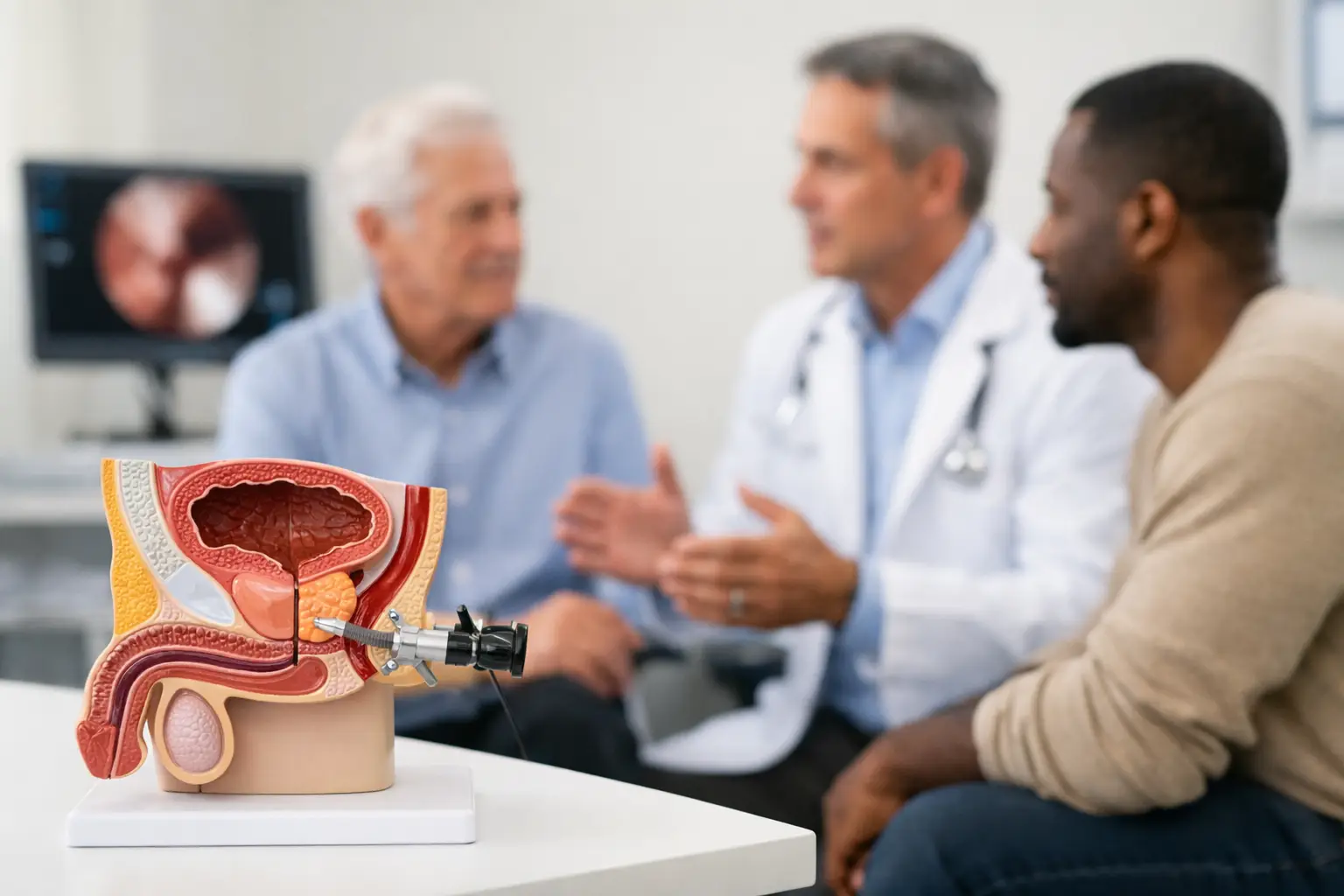
A proper workup usually includes symptom review, urine testing, a physical exam, and often additional evaluation such as bladder scanning, cystoscopy, or imaging. This is where personalized care makes a real difference.
When medication is not enough
Many men start with medication for BPH, and that can be appropriate. Drugs such as alpha blockers may improve urinary flow, and other medications can help shrink the prostate over time. But medicine is not always enough.
Some men get only partial relief. Others dislike side effects such as dizziness, fatigue, or sexual changes. And some simply do not want to stay on medication long term if a procedure could address the obstruction more directly.
That does not mean everyone should rush into treatment. It means there is a point where repeated nighttime waking, urgency, weak stream, incomplete emptying, infections, retention, or bladder strain become harder to ignore. At that point, discussing procedural options is reasonable.
Questions worth asking at your consultation
A good consultation should leave you with a clear sense of what your prostate anatomy looks like, which procedures you are a candidate for, and what recovery will realistically involve.
It is helpful to ask how much symptom relief you can expect, whether a catheter is likely, how the procedure may affect sexual function, and how long the results typically last. You should also ask what happens if your symptoms return later. In some cases, a less invasive treatment now still leaves future options open, which can be reassuring.
For patients in Southwest Florida, working with a specialist who offers multiple BPH therapies matters because it reduces the pressure to fit everyone into the same treatment pathway. At Urology Experts, that patient-first approach is central to how treatment planning should work.
The right BPH procedure should make your life easier, not just your chart look better. If urinary symptoms are wearing you down, the next step is not guessing which treatment sounds newest or least scary. It is getting a thoughtful evaluation and choosing the option that matches your anatomy, your goals, and the way you want to live.